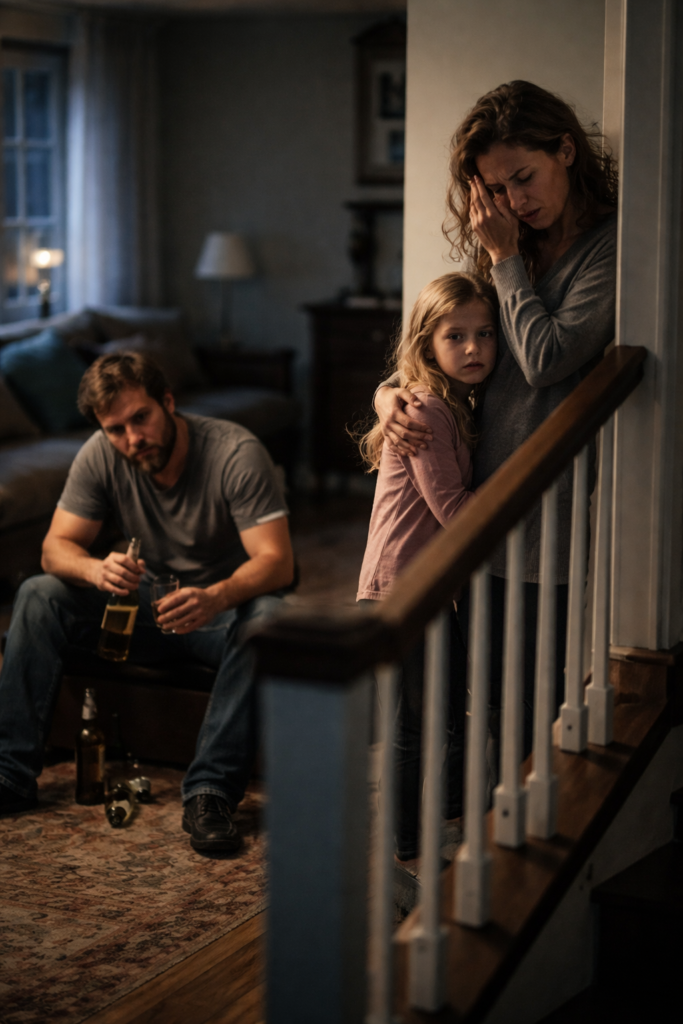
Beyond Closed Doors: Addiction Inside a Marriage
From the outside, many marriages look whole—shared holidays, smiling photos, routines that seem steady and safe.
Behind closed doors, some couples are fighting a battle no one sees.
Addiction rarely storms into a marriage all at once. It slips in quietly. An extra drink to take the edge off. A purchase to celebrate a win. A habit that feels manageable—until it isn’t.
And often, the most painful part isn’t the addiction itself.
It’s the slow transformation of intimacy.
The Way It Used to Be
There was a time when connection between Lisa and me felt effortless.
I could walk up behind her in the kitchen, wrap my arms around her waist, kiss her neck, and feel her melt into me. A simple kiss could shift from sweet to electric. I’d turn her toward me, feel her response, and lead her down the hallway to the bedroom with nothing more than a look.
There was laughter.
There was hunger.
There was certainty.
I never had to question how she felt or how the physical act would end.
The Shift You Don’t See Coming
Addiction doesn’t just change behavior.
It changes atmosphere.
The sex didn’t stop. That’s what made it confusing.
We were still intimate. Still sharing a bed. But it became less frequent. Less spontaneous. Less alive.
For Lisa, I could sense it slowly becoming duty. Not rejection. Not hatred. Just obligation. A wife trying to hold together something that felt fragile.
For me, intimacy meant two things:
- It reassured me we still had connection.
- It gave me something else I didn’t yet understand—I was chasing the chemical high of what I later was educated about—Dopamine and Oxytocin
At the time, I believed that if we were still sleeping together, we were still okay. Physical closeness meant emotional safety. I clung to that belief.
But around the same time, Lisa began attending Al-Anon.
I didn’t realize it then, but Al-Anon was waking her up.
Waking her up to patterns.
Waking her up to denial.
Waking her up to herself.
And awakening changes how someone looks at you.
I would kiss her and she’d give me a small, polite smile afterward. The kind that says, “thank you.”
But in her eyes, I began to see distance. Exhaustion. Evaluation.
The smile said thank you.
But what I felt underneath it was something closer to: you disgust me.
Whether she ever thought those exact words almost didn’t matter. That’s what addiction does, it erodes trust until affection feels filtered through history.
Nothing is lonelier than lying next to someone you love and wondering when you became someone, they brace themselves against instead of lean into.
The Dopamine Chase I Didn’t Understand
It wasn’t until my second rehab that I learned what was happening inside my brain.
Addiction floods the brain with dopamine—far beyond what natural experiences produce. Over time, the brain adjusts. What once felt powerful becomes muted.
Even an orgasm—one of the highest natural dopamine releases a human can experience—no longer reaches the same peak after prolonged substance use.
I didn’t know that then.
All I knew was that something inside me felt empty.
And without consciously realizing it, I began chasing anything that might fill that void.
For some addicts, that means more drugs.
More alcohol.
Prostitutes.
Extreme behavior (eating, extreme sex acts, adrenaline rushes, self-harm, etc…)
Escalation.
For me, it looked more socially acceptable—but it was the same pursuit.
A new car every year-new cars she hated, and she saw as a waste of money. But I got a temporary dopamine hit and addiction is stronger than her feelings or compromise.
As far as money while in my second rehab Lisa became detective and calculated I spent nearly $30,000 in a year on alcohol. Since I did the finances and we were blessed having so much coming in her lifestyle wasn’t affected so she never noticed.
ATVs.
Motorcycles.
The next upgrade.
The next purchase.
The next thrill.
I also pushed for more intimacy with her, thinking closeness would fill the emptiness.
Nothing did.
Because the void wasn’t about possessions.
It wasn’t about sex.
It wasn’t about her.
As long as I was drinking and artificially raising my dopamine levels, my brain was calibrated to expect something life could not naturally provide.
I was unknowingly asking my wife to compete with a chemically altered reward system.
She never stood a chance.
Two Different Realities in One Home
Inside addiction, couples often begin living in separate emotional worlds.
The addicted spouse feels shame, defensiveness, and hunger for relief.
The other spouse feels confusion, hypervigilance, disappointment, frustration, anger and grief.
Lisa wasn’t becoming cold.
She was becoming clear.
Clarity feels harsh to someone still in denial.
Al-Anon wasn’t teaching her to hate me.
It was teaching her boundaries.
And boundaries can feel like rejection to someone who has relied on chemistry instead of connection.
The Truth About the Void
Addiction doesn’t just steal sobriety.
It distorts desire.
It confuses pleasure with intimacy.
It makes a person believe that the next thing will fix the ache.
But nothing natural can compete with artificially elevated dopamine levels.
Not sex.
Not success.
Not new toys.
Not even love.
Until the substance is removed and the brain has time to reset, the chase continues.
And the marriage slowly absorbs the damage.
Can a Marriage Survive This?
Yes.
But not through seduction.
Accepting no sex for a year or more and not cheating.
Not through pretending.
Not through buying one more thing.
Not through performing connection.
Healing begins with truth.
Truth about the addiction.
Truth about the brain.
Truth about the hurt.
Truth about the distance.
And eventually, something surprising can happen.
When chemicals stop driving desire, intimacy can slowly return to what it was meant to be—not a dopamine hit, not reassurance, not proof of survival—but connection.
Real connection doesn’t scream.
It doesn’t spike.
It doesn’t crash.
It steadies.
Reflection
If addiction has lived inside your marriage, know this:
You are not uniquely broken.
You are not alone.
And you are not beyond repair.
But silence will not heal it.
Sometimes the most courageous moment in a marriage is not passion in the bedroom—
It is two people sitting across from each other and saying,
“This is what has happened to us.”
And choosing, from there, to rebuild.
Author Jeffrey Baxter